I gave a talk a the yearly SBB DevDay conference. It was about SAFe’s principle #1: Take an economic view. The main idea was to compare the economics of software development with the economics of manufacturing to better understand concepts like capex, opex, maintainance, debts.
Category: Technology & Innovation
Understanding ChatGPT
ChatGPT has surprised everyone. We now have systems that produce human-like texts. Without much fanfare, ChatGPT actually passed the Turing test.
While we don’t fully comprehend how and why large language models work so well, they do. Even if we don’t fully understand them, it’s worth building an intuition about how they function. This helps avoid misunderstandings about their capabilities.
In essence, ChatGPT is a system that learns from millions of texts to predict sentences. If you start a sentence, it tries to predict the next word. Taking the sentence augmented with one word, it tries again to predict the next word. This way, word after word, it can complete sentences or write whole paragraphs.
Interestingly, the best results are achieved when introducing randomness in the process. Instead of always selecting the most probable word each time, it’s best to sometimes pick alternatives with lower probabilities. It makes the sentences more interesting and less redundant.
What’s also kind of amazing is that this approach works to answer questions. If you start with a question, it tries to predict a reasonable answer.
Thinking of ChatGPT as a text predictor is useful, but it’s even more useful to think of it as a form of compression. When neural networks learn from examples, they try to identify regularities and extract recurring features. The learning is lossy: the neural network doesn’t remember the examples it was fed with exactly. But it remembers the key features of them. When ChatGPT generates text, it “interpolates” between the features.
Impressive examples of “interpolation” are prompts that mandate an answer “in the style of,” for instance, “in the style of a poem.” ChatGPT not only gives a coherent answer content-wise but also applies a given style.
But ChatGPT is, in essence, interpolating all the time. It’s like a clever student who didn’t study a topic for the course but has access to the course material during the exam. The student may copy-paste elements of the answer and tweak the text to sound plausible, without having any real understanding of the matter.
What ChatGPT shows us is that you can go very far without a true understanding of anything. And I believe that this applies to how we behave too. On many topics, we can discuss based on facts we heard, without actually understanding the underlying topic. Many people who sound smart are very good at regurgitating things they learned somewhere. They wouldn’t necessarily be particularly good at reasoning on a topic from first principles. To a certain degree, we conflate memory with intelligence.
At the same time, ChatGPT can do some reasoning, at least some simple one. It probably has extracted some feature that captures some logic. It works for simple things like basic arithmetic. But it fails when things become more complicated.
Fundamentally, when predicting the next word, ChatGPT is doing one pass of the neural network, which is actually one function. A pass of the neural network cannot do a proper computation that would involve, for instance, a loop. It fails the prompt “Starting with 50, double the number 4 times. Do not write intermediate text, only the end result.”, giving 400 back. But asked to write the intermediate steps, it computes correctly 800. You can help ChatGPT into multi-step computation by asking him to write the intermediate steps because then it will go through the neural net several times. This pattern is known as “chain of thought prompting.”
We don’t fully understand ChatGPT yet—how it works and what it really can do. But clearly, it can do more than we expected, and it will bring all kinds of exciting insights about cognition.
References:
What is Apple?
Apple has grown into a fascinating company with a diverse range of offerings. Initially known for its computers, it has expanded into various industries. With Apple being the most valuable company in the world according to its market capitalization, it’s worth asking: what is actually Apple now?
It’s a fashion company – Apple has become a fashion staple, with its accessories blending seamlessly into our daily lives. We don’t just use Apple products; we wear them (EarPod, iPhone).
It’s a luxury company – Apple’s products command a premium price tag, appealing to consumers seeking quality and prestige. Interestingly, both the affluent and the everyday consumer use Apple products.
It’s a technology company – At its core, Apple remains a technology powerhouse, continuously pushing the boundaries of innovation with advancements like the M1 chip or VisionPro, a testament to its ongoing commitment to cutting-edge design and functionality.
It’s an entertainment company – Venturing into entertainment with Apple TV and original content production, Apple has diversified its portfolio beyond hardware alone.
It’s a finance company – Apple has financial services like the Apple Store and Apple Pay, showing its ambition to capitalize on its robust market presence. Apple is becoming a bank more and more.
So basically, Apple does a bit of everything, which is pretty interesting!
While many of these products were launched under the leadership of Steve Jobs, others have been initiated under the stewardship of Tim Cook. Cook may not have spearheaded groundbreaking innovations like the iPhone, but his management has propelled Apple to new heights.
Renowned investor Warren Buffett’s strategy typically avoids technology investments due to their intense competition and difficulties in sustaining lasting competitive edges. Instead, he prefers investments in durable goods and services with robust brand loyalty and high switching costs. The evolution of Apple’s identity is noteworthy, particularly as Buffett began investing in the company. Today, Apple stock comprises a significant 70% of his portfolio, marking a notable departure from his traditional investment approach.
Apple’s story is unique and one thing remains certain: its ability to surprise, inspire, and redefine industries will continue to captivate audiences worldwide.
(Style improved with ChatGPT)
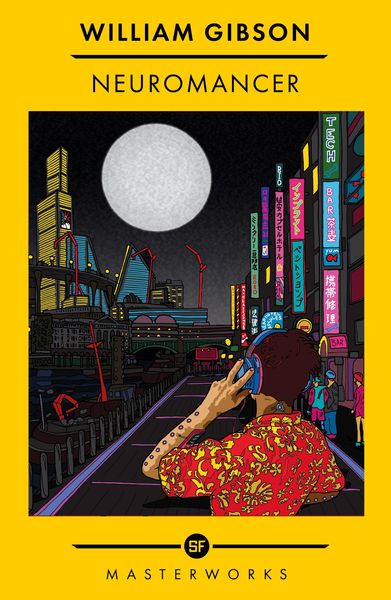
Neuromancer
Amidst all the excitement about AI and the metaverse, I recently decided to dive into Neuromancer, the classic sci-fi novel that sparked the cyberpunk genre.
I’d heard it was a big inspiration for The Matrix, so I was curious to see how they compared. While there are definitely similarities, like the matrix itself and the tough, leather-clad female character, the plot diverges distinctly.
Instead of focusing on freeing humanity from the matrix, the book revolves around jailbreaking an AI and merging it with another AI to create a superintelligence. It kind of reminded me of Transcendence, with its futuristic vibe similar to Blade Runner, which came out around the same time as the book.
The writing style is pretty unique, almost like poetry in places, and the story feels like a wild ride. It’s not the easiest read, but it captures well the crazy journey the characters are on.
One thing that stood out to me was how the book portrays the matrix/cyberspace—it’s abstract and undefined, somewhere between VR and a system for visualizing information, kind of like augmented reality today.
It’s also somewhat ironic is that despite its visionary themes, Neuromancer didn’t foresee wireless communication. The protagonist constantly “jacks in” and “jacks out”, relying on physical cables.
It’s pretty wild to think that this book was written back in 1982, considering it tackles themes like AI and the metaverse that are becoming such big topics in 2024. Apple released its first VR set, AI got mainstream, and discussions about the risks of AI are hotter than ever. Neuromancer’s foresight is pretty impressive, making it a classic worth revisiting.
(Blog post style improved with ChatGPT)
Scarcity is the Mother of Invention
The original proverb is “Necessity is the mother of invention.” But as we explore the ways we innovate, it’s clear that scarcity rather than necessity plays a big role in sparking creativity. Indeed, if you’re in need of something abundant, you won’t be innovative. It’s scarcity that prompts us to think differently and find new ways to solve problems.
Scarcity affects many parts of our lives: from time and labor to energy, food, and attention. Each scarcity challenges us to think creatively and come up with new solutions.
Time is something we all wish we had more of. Anything that helps us save time or use it better becomes really valuable. Tools like ChatGPT make communication and problem-solving faster and easier. And platforms with good content save us from wasting time on things we don’t enjoy.
When there aren’t enough people to do the work, organizations have to find ways to be more productive. Digitalization, for example, helps streamline processes and automate tasks. In fields like transportation – where I’m working – , automation helps deal with staffing shortages, like in traffic dispatching.
Other resources, like energy and attention, are also scarce because we only have so much time and focus to go around. Using energy efficiently saves us money and time, while managing attention effectively helps us stay focused on what’s important.
When resources are scarce, we naturally start looking for other options. We switch from human to machine labor, look for renewable energy sources, find sustainable food options, and use technology to help manage our attention better.
While necessity might kickstart our creativity, it’s scarcity that really pushes us to innovate.
(The style of the blog post has been improved with ChatGPT, of course)
Working with AI – A First Experiment
AI will be in an inevitable tool to use in the future. To get a first impression of how it is to work with AI, I decide to realized a very small project using ChatGPT as assistant.
The small project would be a webpage that charts the performance of a portfolio of stocks. I haven’t written webpages since a long time (15 years!), so I would have to catch up using ChatGPT. I also decided to explore AWS Lambda at the same time.
The architecture is very simple: The webpage is a static file and historic stock quotes are stored on AWS S3. There’s a lambda that fetches the stocks quotes every night and stores the output in S3. The computation of the portfolio is done on the client-side. The key to access the stocks API is therefore not public, and I also don’t need a real backend to serve data.
For charting, ChatGPT suggested Chart.js, which was fine. For the stock API, the suggestions of ChatGPT were less useful. I had to compare myself the various sites directly. Finally, I settled on marketstack. That’s the best free tier I could find. Unfortunately, it doesn’t provide an API for currency rate. For hosting, ChatGPT gave me handing hint: you can upload you static website on AWS S3 and make it publicly accessible.
With the help of ChatGPT, it took my a couple hours to build the first version of the webpage using Chart.js and pure javascript.
Key learnings:
- AI productivity boost is real. ChatGPT is quite amazing. It can give good suggestions about technological options. The quality of the code is also surprisingly good. You need to double check the answers, but it provides a lot of good insights. Definitively a productivity boost.
- Good onboarding experience helps win clients. There are many stocks API. The quality of the various stocks API differ a lot. Onboarding is a killer point for any technical product. I chose marketstack because it was the simplest option to get something working, even though I know it doesn’t have a currency API which I will need later on.
- Domain knowledge is always an asset. As with most business domain, things are never as simple as they seem. Computing the performance of a portfolio seems a no brainer. But stocks can split and have dividends. Therefore, the nominal historic price is misleading for long-term historical analysis. Instead, APIs provide adjusted closing prices.
- Designing framework APIs is an art. There are many charting libraries and the way they are designed differ a lot. This reminded my of Why a Calendar App is a Great Design Exercise. Designing a chart API would a great exercise, too.
As for the webpage, I see lots of way to improve it further. From the domain point of view, I could add support for comparison with various indexes. From the technical point of view, being able to edit the portfolio would be nice. Supporting several users with login would also be a nice experiment. Figuring out what a delivery pipeline for lambda look like would also be interesting. At the moment, it was all manual uploads to S3.
If I have enough time, I may continue the project with ChatGPT. For the technical points, ChatGPT helps a lot, and proved to be a valuable assistant.
Using Technology as Intended
Technology people come in two flavours: generalist and experts. I’m definitively a generalist. I’ve a good grasp of the core concepts being the technologies we use. I’m however lacking the expertise about the details of using them. For this, I rely on experts.
This lack of expertise of the details may even turn out to be an advantage in my position. Technologies have core concepts that support some primary technology use case. With enough knowledge about technical details, it’s possible to use the technology to support other use cases. But it’s almost never a good idea in the long term. The implementation will be fragile to subtle changes in details of the technology, and few people in the organization have enough expertise to maintain such an implementation. If your use case is not supported easily, rethink your problem at some other level. Not knowing too much about the technology means I’m limiting its use to what’s maintainable.
The last example of this kind that I encountered was about container dependencies on openshift. In our current system (not openshift-based), we start the containers using “run levels”. Such a concept doesn’t exist in openshift. You could recreate something similar using init containers and some deep technical knowledge, but it wouldn’t be trivial. Rather than misusing the technology, we will have to solve our problem at another level. The containers should be resilient to random startup order at the application-level.
Other examples from the past include details of object-relational mapping or distributed caching. Here too I believe that beeing “too smart” about using the technology isn’t good in the the long term. It’s better to stick to the common use cases and change the design at the application-level if necessary.
Sometimes some part of the design may leverage deep technological details. I’m not completely forbidding it. Used in strategic places and encapsulated in proper technology component, this is a viable strategy. We have for instance engineered a library for leader election based on the solace messaging middleware, that relies on a deep expertise of the semantics of queues in solace. This was a strategic decision and the library is maintained by a team of technology experts with proper knowhow and the support from solace itself. But such situations should be exceptions rather than the norm.
It’s hard to resist the appeal of a clever technology-based solution, but as engineers we absolutely should. When we misuse technologies, we paint ourselves in a corner.
Superficially Silly Ideas Can be Game-Changers
When Twitter appeared more than a decade ago, I though it was silly. I saw little value in a service that only allowed sharing 140-character long text messages. I registered on a bunch of social media platforms and created nevertheless a twitter account. Some years later, the only social media platform I’m actively using is… twitter.
There’s a lesson here for me and it’s that it’s hard to predict what will succeed. A lot of products can appear silly or superficial at first. They may appear so in the current time frame, but this can change in the future. Initially, twitter was full of people microblogging their life. It was boring. But it morphed in a platform that is useful to follow the news.
A startup like mighty can look silly now – why would you stream your browser from a powerful computer in the cloud? But as applications are ported to the web, maybe the boundary between thin client and server will move again.
We prefer to endorse project that appear profound and ethical, like supporting green energy, or reducing poverty. Product ideas that are silly or superficial don’t match these criterion and it’s easy to dismiss them. But innovation happens often because of such products. No matter how silly or superficial you think they are, if they gain traction, they need to solve their problem well at scale. These products are incubators for other technologies that can be used in other contexts. Twitter, for instance, open sourced several components. If Mighty gains traction, it might lead to new protocols for low-latency interactive streaming interfaces. An obvious candidate for such a technology could be set-top TV boxes.
These products might appears superficial at first and might lack the “credibility” of other domains, but here too, the first impression might be misguiding. A platform like twitter can support free speech and democracy (sure, there are problems with the platform, but it at least showed there are other ways to have public discourse). A product like Mighty might in turn make it more affordable to own computers for poor people, since it minimizes hardware requirements. Because these product don’t have an “noble” goal initially attached to them, doesn’t mean they don’t serve noble cause in the long term.
There are of course silly ideas that are simply silly and will fail. But the difference between products that are superficially silly and truly silly is not obvious. I took in this text the example of twitter and mighty. In retrospect, the case for twitter is clear. For mighty, I still don’t know. The idea puzzles me because it’s at the boundary.
More
Update 13.11.2022
- Hacker News thread “I decided to stop working on Mighty” . So I guess it settles the case.
Data Lock-Out: Understanding the Risks
My computer died a few days ago. Fortunately, I had a backup and could restore my data without problem on another laptop. Still, I’ve been wondering in the meantime: what if the restore hadn’t worked? How easily could I be locked out of my data ?
I have data online and data offline. My online data are mostly stored by google. If say, my account is compromised and due to a misbehavior from the hacker, my account is disabled. Would I ever be able to recover my online data? Not sure.
My data offline are stored on the harddrive, which I regularly backup with time machine. If a ransomware encrypts all my data, the backup shouldn’t be affected. Unless the ransomware encrypts slowly over months, without me noticing, and suddenly activates the lock out. Am I sure ransomeware don’t work like this? Not sure.
My laptop suffered a hardware failure. It hanged during booting, and no safe booting mode made it through. The “target disk” mode seemed still to work, though. It would have been a very bad luck, to not be able to access either the data on the harddisk or the backup. Both should fail simultaneously. But can we rule out this possibility? Not sure.
Harddisks and backup can be encrypted with passwords. I don’t make use of this option because I believe it could make things harder in case I have to recover the data. I could for instance have simply forgotten my password. Or some part could be corrupted. Without encryption I guess the bad segment can be skipped; with encryption I don’t know. Granted, these are speculative considerations. But are they completely irrational? Not sure.
Connecting my old backup to the new computer turned out to be more complicated than I thought. It involved two adapters: one for firewire to thunderbolt 2 adapter and one thunderbolt 2 to thunderbolt 4 adapter. Protocol and hardware evolve. With some more older technology, could it have turned out to be impossible to connect it to the new world? Not sure.
The probability of any of these scenario happening is small. It would be very bad luck and in some case would require multiple things to go wrong at once. But the impact would be very big—20 years of memory not lost, but inaccessible. There’s no need to be paranoid, but it’s worth reflecting on the risks and reduce the exposure.
More:
Stuff Matters
Stuff Matters is a very nice little book about the materials that surround us. Organized in ten chapter, each tracing the history of a class of material (metal, paper, glass, plastics, chocolate, gels, graphene, concrete, ceramics, biomaterial), we get to better appreciate how much tinkering and research took place over centuries to discover all these materials and their properties.
Most materials in the book are materials we know and can relate to. We know their basic properties, for instance, that rocks are solid, don’t melt easily, and don’t conduct electricity. Having two young children discovering the world, I marveled at how much they still need to discover. For a large part, we learn from personal experience. But we also learn through school, reading, movies, art, architecture. Materials are everywhere and are an integral part of our society and culture. That’s one theme of the book and it resonated well with me.
Mark Miodownik is a good storyteller. When talking about materials, there’s always a human context that makes the story relatable and engaging. For instance porcelain isn’t just porcelain, it’s also the story of Chinese emperors trying to impress their rivals with refinery and sophistication. At the same time, the book has its good share of technical details. We learn about the structure of many materials, including several modern “high tech” materials such as graphene and aerogel. The book even mentions invisibility cloak, how cool is that?
The whole book is interspersed with personal anecdotes. They don’t feel forced and I enjoyed them. Mark Miodownik commands his subject for sure and is passionate about it. I loved the anecdote about him being profoundly impressed by the Crown Jewels of England as a kid. Not because of the luxury they represent but because of their “primitive” materials, mostly pure gold and gems. We can really feel that his passion for the subject came at an early age. And passion is contagious. This book is a nice example of it.